
One of my goals when we moved to Poison Ivy Acres was to not have any organic matter leave the property. My desire was that all leaves, sticks and branches remain here. Pulled weeds and cut perennials are easy. They go into the large compost pile. But larger brush and branches can be more problematic, especially on smaller properties.
Many people can create brush piles on the sides or in the rear of their yards. These not only hold the sticks and branches, but are wildlife habitat as well. Birds and small animals shelter in such piles, and the larger trunks and branches become “bug hotels” where woodpeckers and other birds find food.
But recently I’ve come to see that such piles can do double duty. They can hold the fallen limbs and other garden debris but in a way that becomes environmental art. So here are just a few ideas to help you get started with your own Debris Storage Art.
If you are in the Northeast you must make it a point to see Sakonnet Garden in Rhode Island. They have selected open days and are masters of using downed trees in their landscape. Here are two photos:
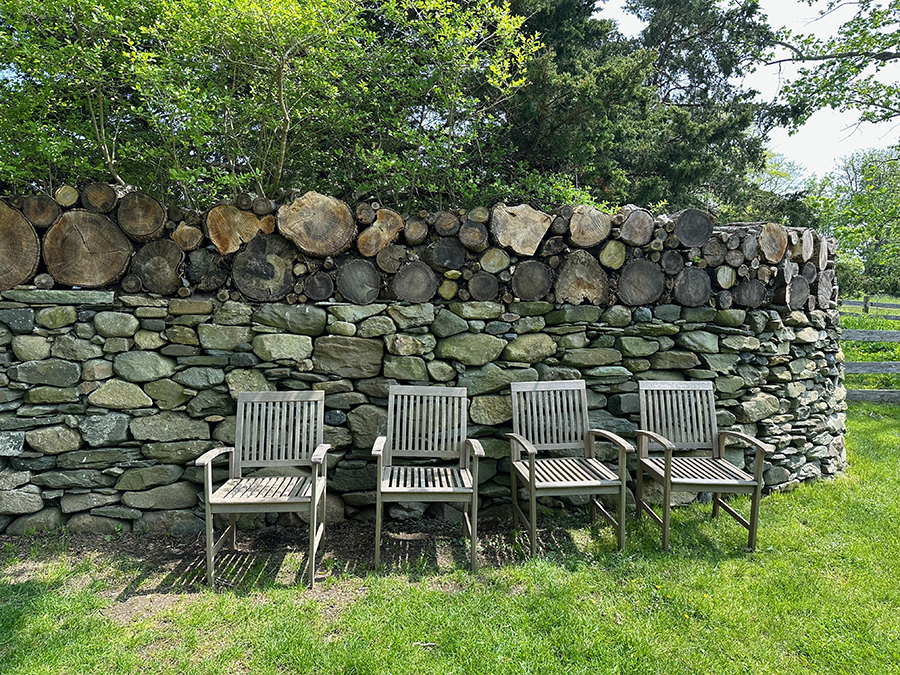
At Sakonnet Gardens in Rhode Island, downed trees are used for fencing.
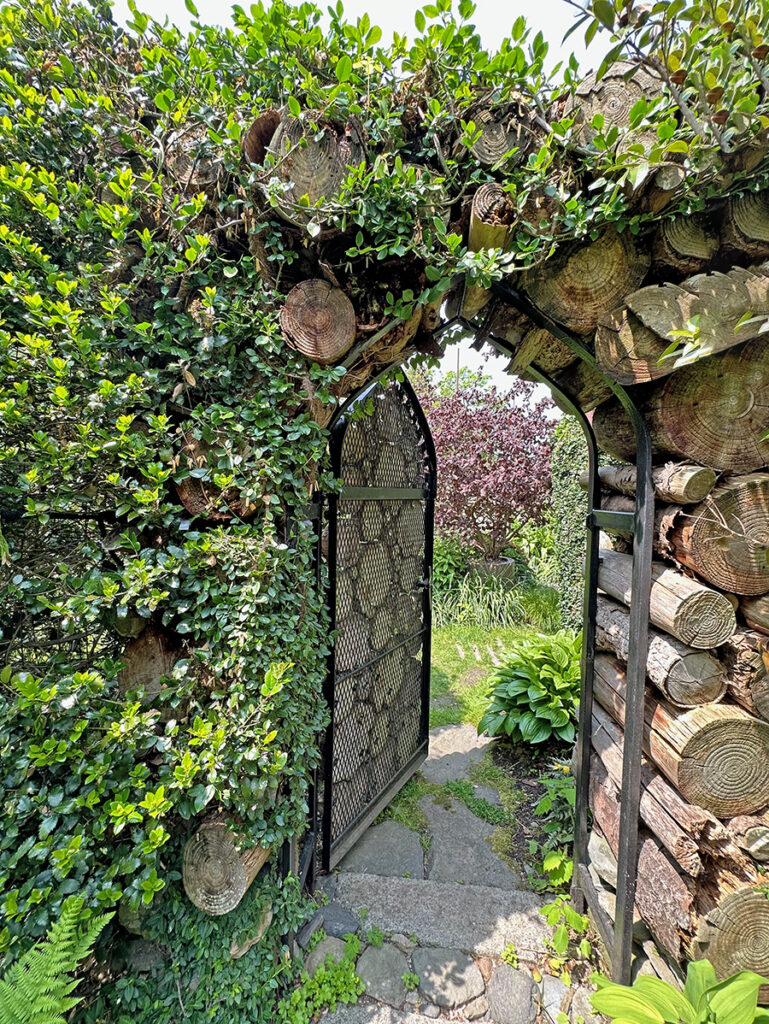
The gate contains slices, and longer logs are used for fence and over the arch. Of course, this is used as a place to grow vines…
At Bedrock Gardens in Lee, New Hampshire, Jill Nooney and Bob Munger use their fallen trees in a variety of ways.
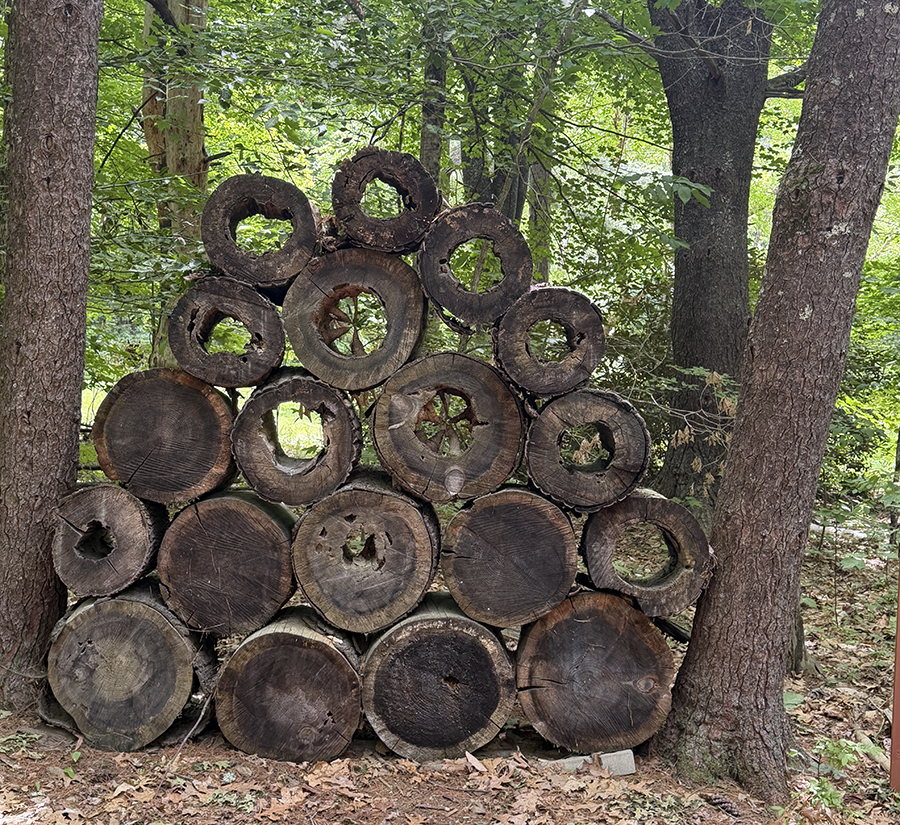
These tree trunks are now a sculpture at Bedrock Gardens.
Early in our years at Poison Ivy Acres we had a compost pile that needed to be hidden, and a bunch of fallen branches after a storm. Dan put several tall lengths of rebar into the ground around the pile, and we wove the sticks between them. See the full post about this in an old blog here.
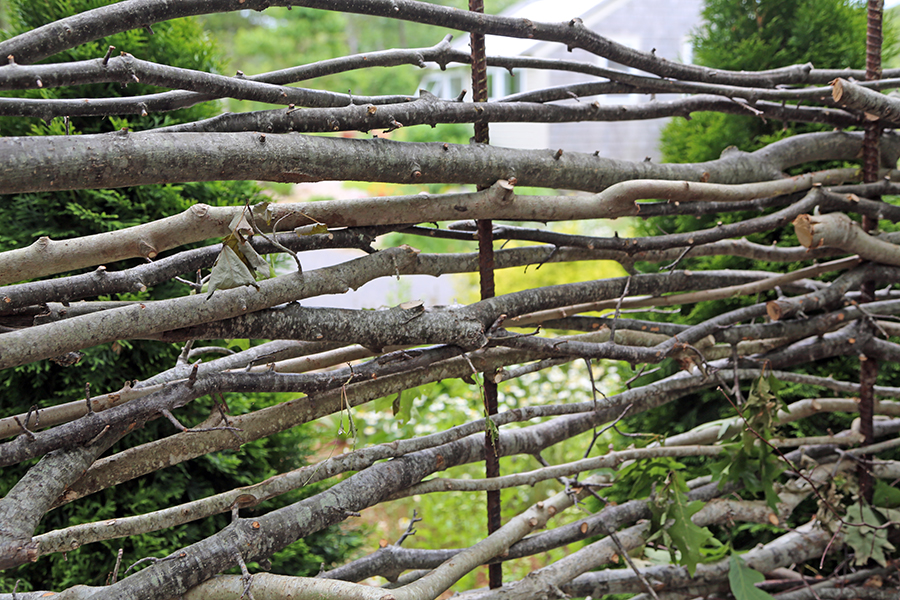
This is a closeup of how we wove the branches into the rebar to make a screen. You could do the same to create a place to grow vines.
When I was at Chanticleer Gardens in Pennsylvania this spring, I noticed that they were making haystack-like piles of brush around a central stake. Brilliant! It’s attractive, it becomes habitat, and these can hold all types of sticks, stems and plant debris.
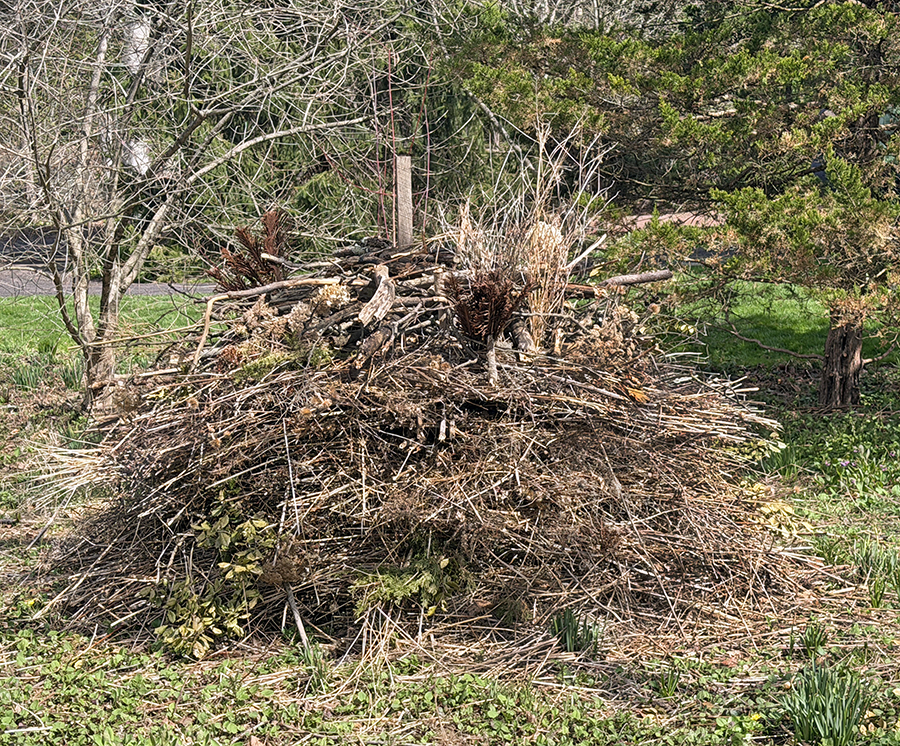
Here is one example of a Chanticleer brush sculpture.
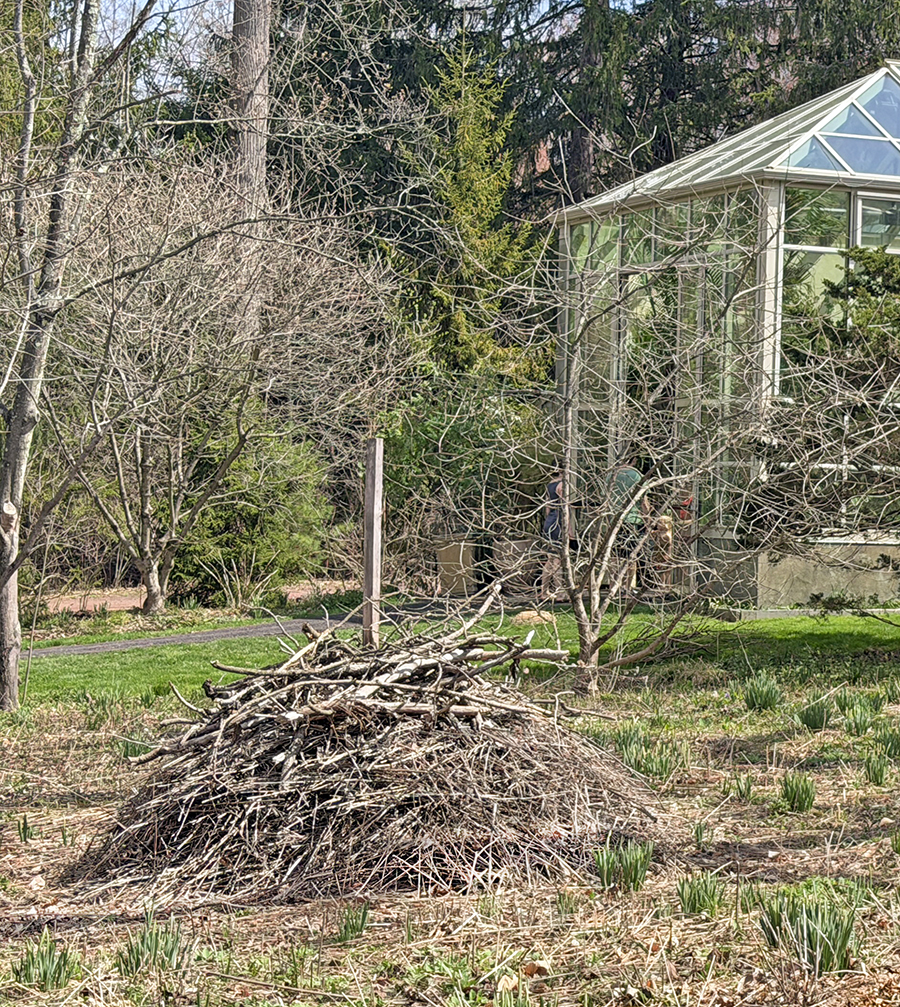
Another haystack-like pile being built at Chanticleer.
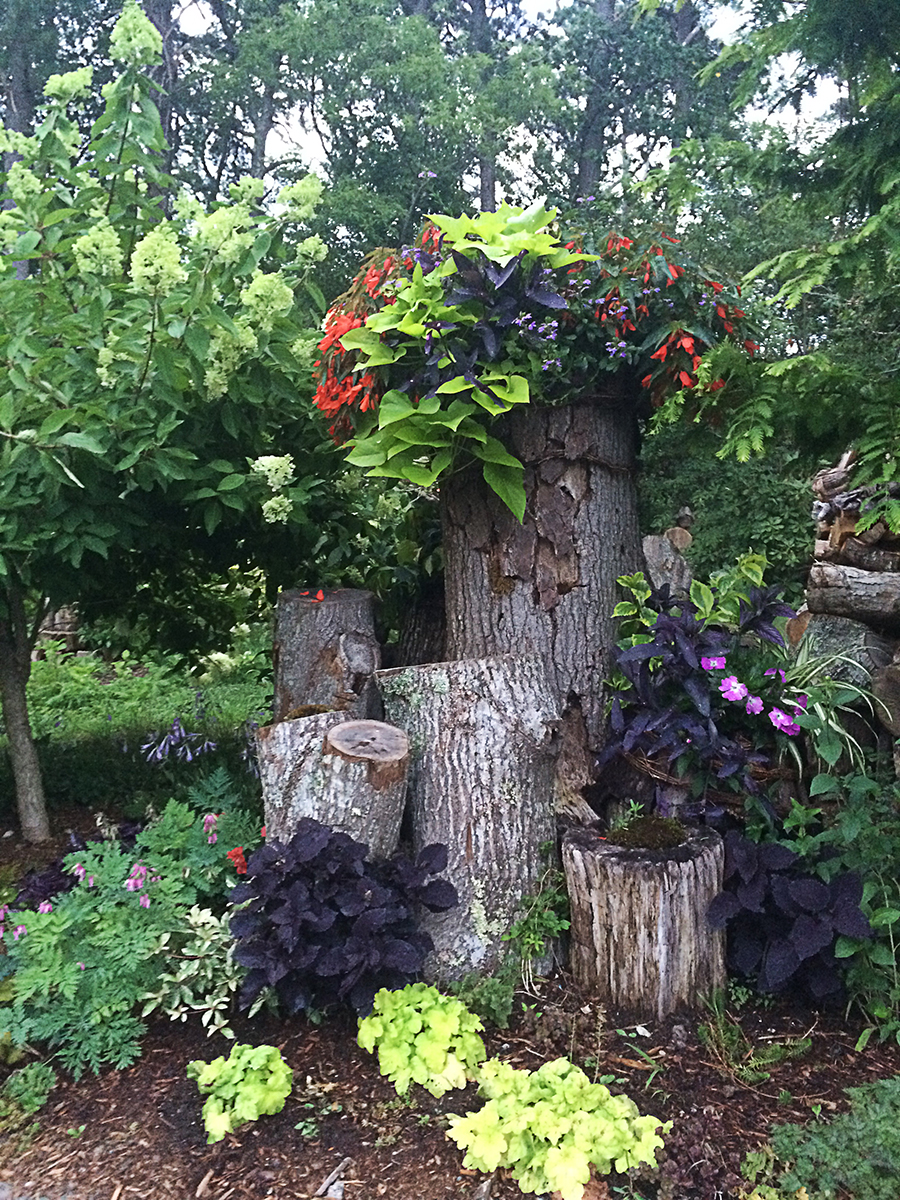
Here is an example of the log planting I did. At the beginning I put Smart Pots on the top of three logs and covered them with bark. Over the years at these logs have broken down, I pulled the fabric pots off and have just planted in the tops of the logs. You can see the beginning planting of these stumps, plus some other logs I’ve planted at this blog post.
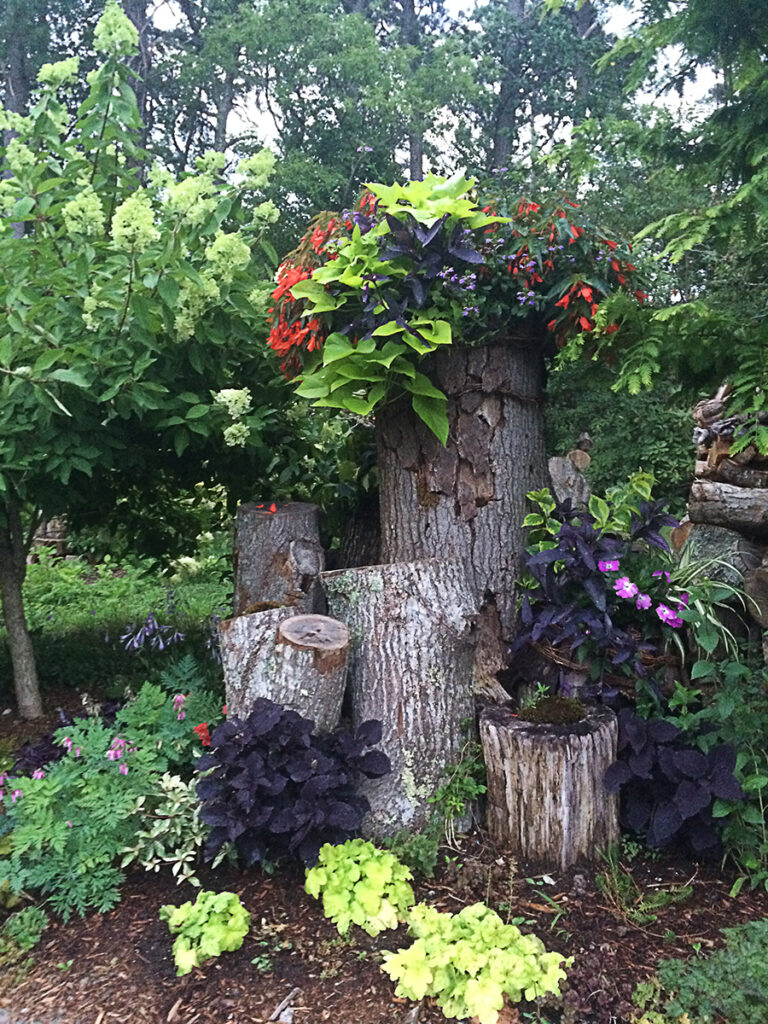
This is how this group of logs looked in the second year of planting.
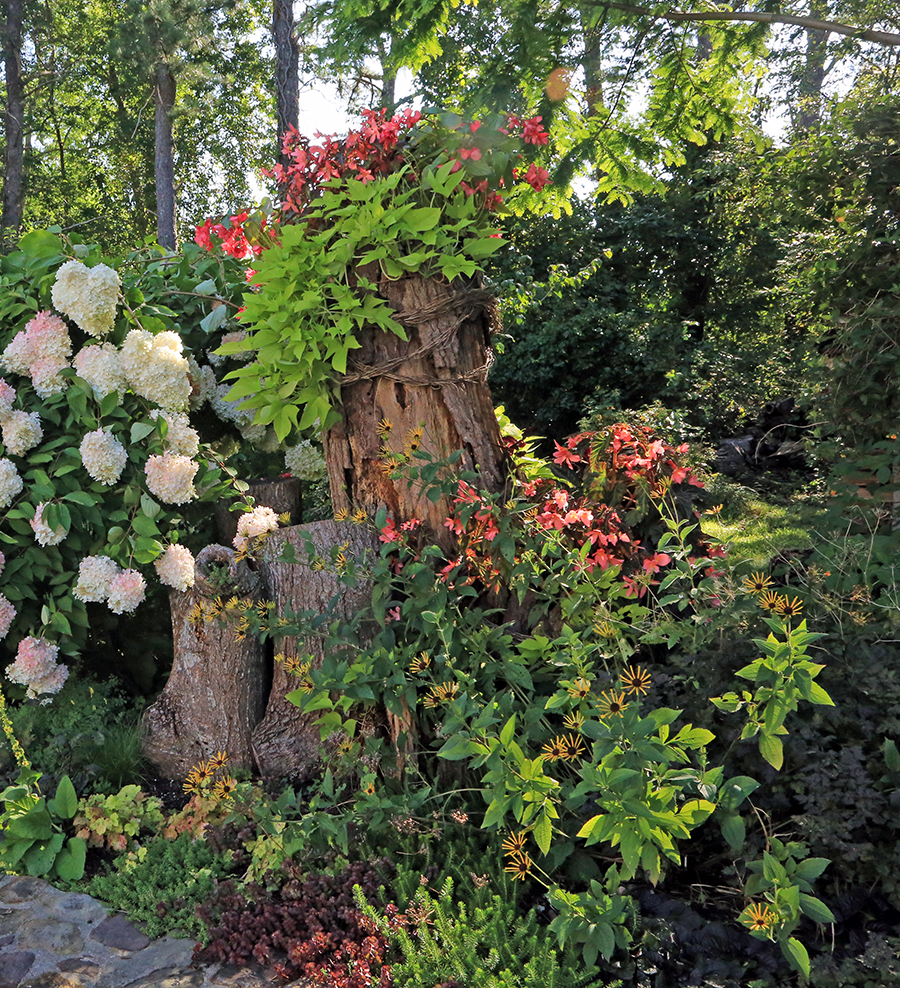
Another year, planted with annuals.
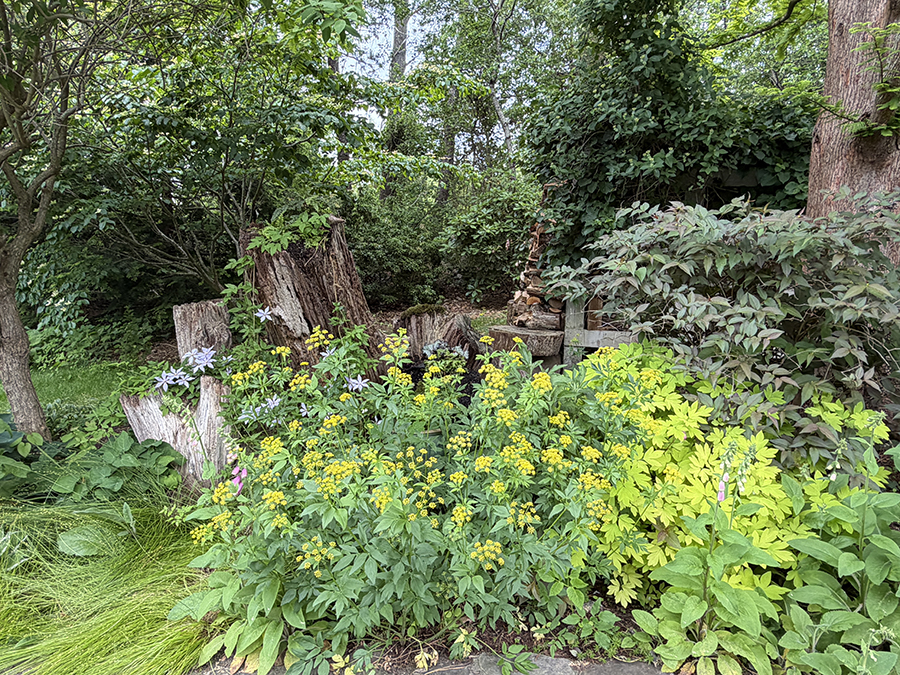
Now, about 15 years later the bags are gone. I plant some small ferns and ivy in the top of the highest log, since it has started to rot out a bit. And I grow more perennials around the logs as well. They are sagging, and that’s part of the attractiveness!
Just for kicks I asked Photoshop AI to show me some ideas for artistically using branches and debris and this is what it created.
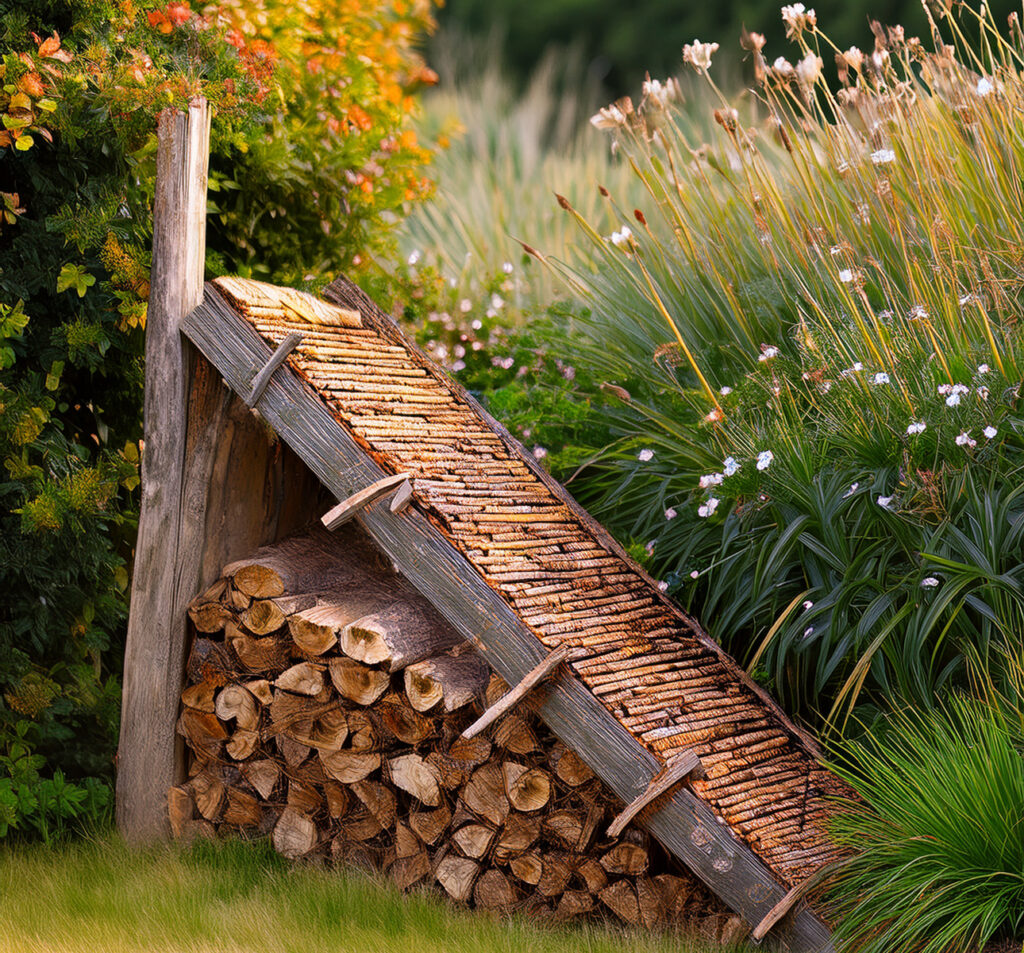
This is one idea that Photoshop AI came up with.
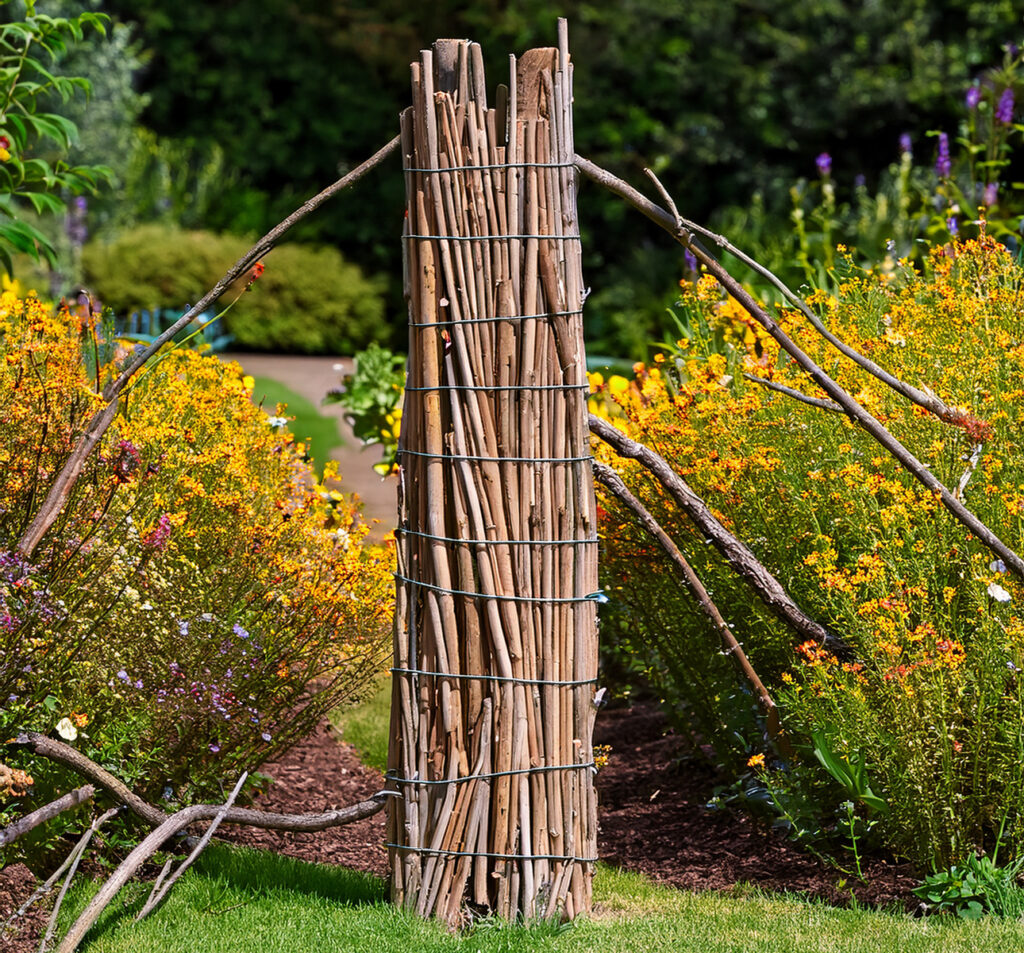
Another Photoshop AI suggestion. I like the idea of wrapping a group of sticks with wire…
So if you have yard debris, think about how it can be used attractively as habitat and art. Let me know what you create.
0 Comments