
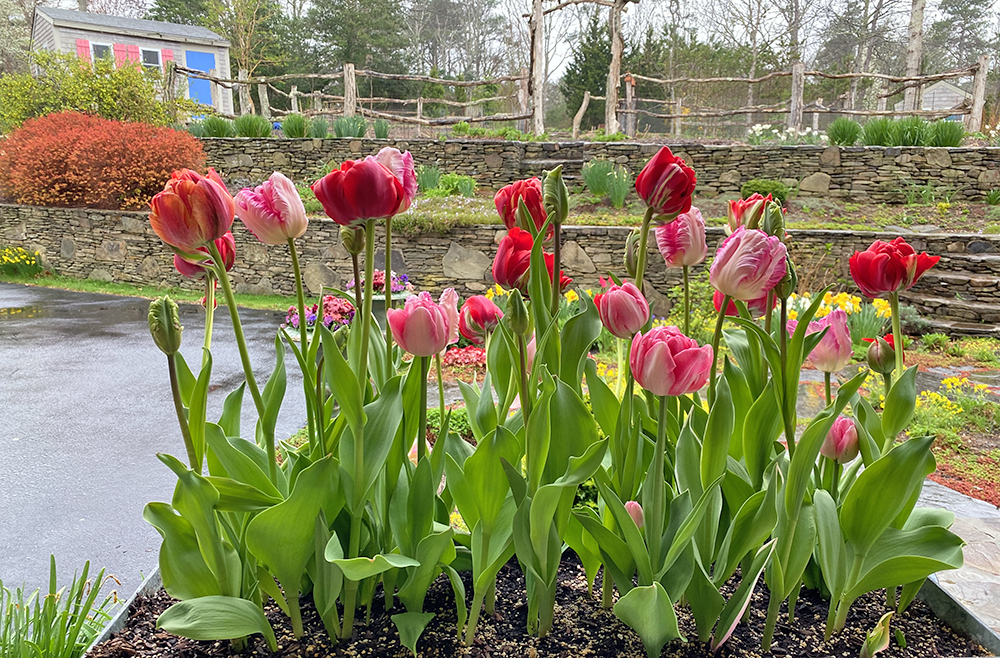
Today on The Garden Lady I’m starting off with a postcard from tulips. Then it is my pleasure to welcome my guest, Rhonda Fleming Hayes, author of Garden For Life.
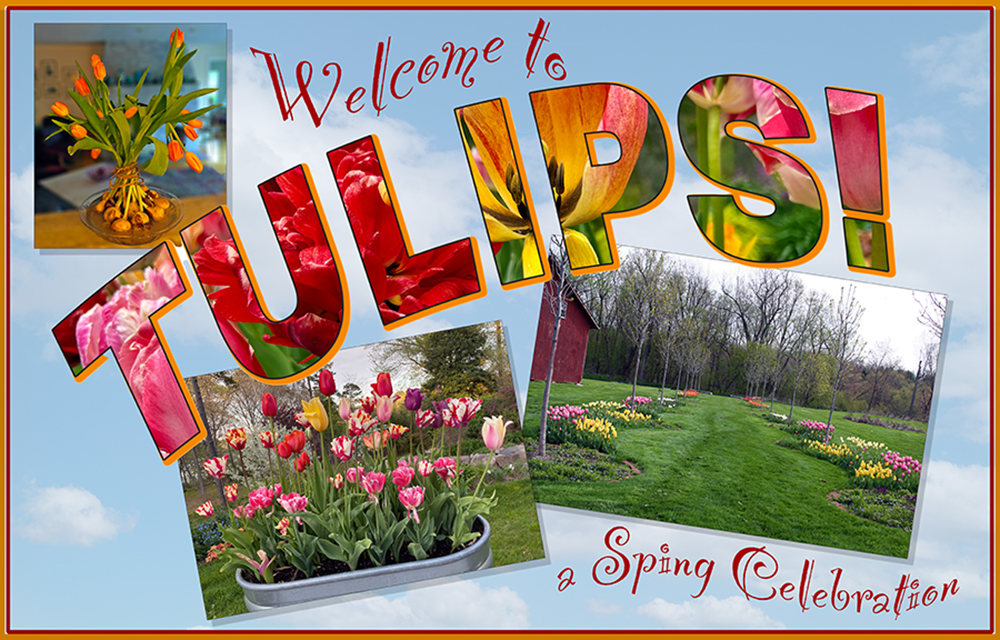
Tulips are indeed a spring celebration. Below you’ll find some tips for growing these colorful bulbs.
Tips for growing tulips successfully:
- Are the deer or rabbits eating your tulip flowers? Spray them when they are just emerging with liquid Plantskydd
- Are the squirrels digging up your bulbs? Dust the area with cayenne pepper. Don’t dust right before a rain, however. I find that I don’t have to do this more than once. The squirrels learn quickly to go elsewhere.
- Do your tulips stop flowering after two or three years? First of all, know that most tulips aren’t bred to be reliable perennials. My solution is to view them as spring annuals, and not to expect them to return. But should you want to plant some that you’re more likely to get back for at least three years, try Darwin Hybrids. Also, the smaller, species tulips often are more reliable.
- When you plant tulips in the ground, don’t plant them too deeply. Cornell University research, led by William B. Miller, found that shallow planting (2-3 inches deep) combined with 2-4 inches of mulch got better results for perennialization than the old-school 6 to 8 inches deep. This “no-dig” top-planting method decreases labor and reduces bulb rot caused by deep, damp soil. See the report here.
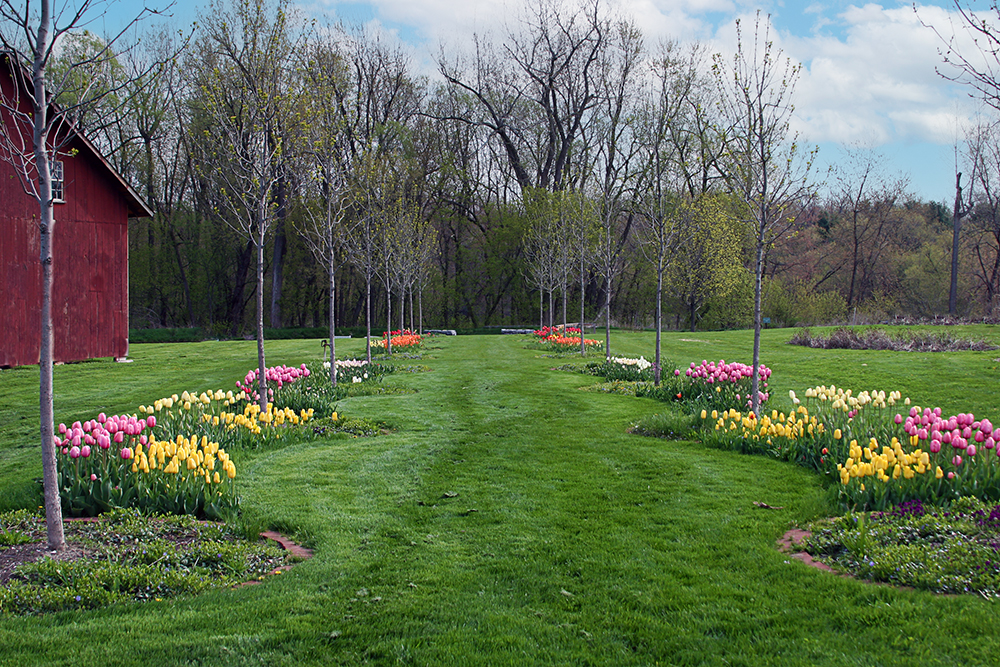
Many parks and gardens that feature lovely tulip displays plant them every year and remove the bulbs when they’ve finished flowering.

My guest on The Garden Lady on April 25th was Rhonda Fleming Hayes, author of Garden For Life. After reading this book I thought that it would be useful for people of all ages who want to make their gardening easier.
Note: this post contains Amazon affiliate links.
0 Comments