
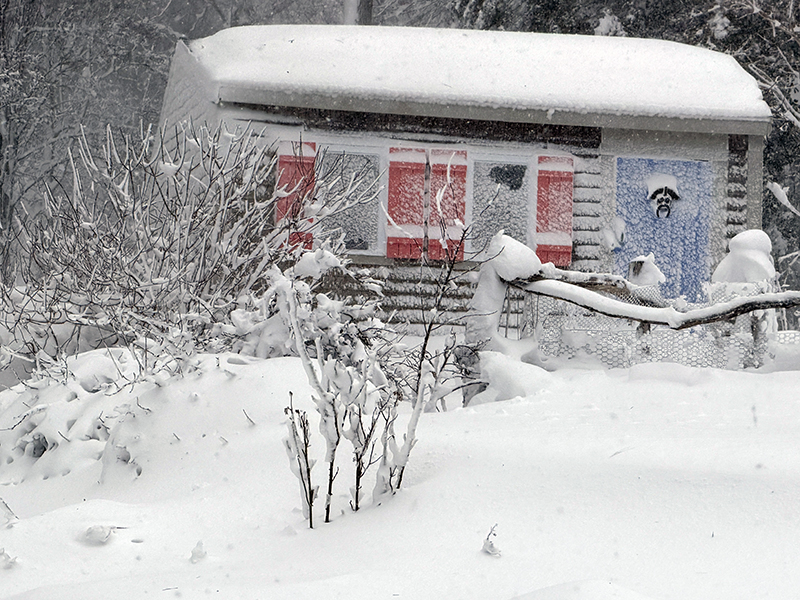
I live on Cape Cod and we just went through an epic blizzard. As I write this on Thursday, there are still people who don’t have power or whose street or driveway hasn’t been cleared of snow. It has been a time when neighbors have come together for the common good, when people’s patience has been tested, and we’ve all learned just how dependent on our phones and computers we are. As people get dug out they have been noticing damage to their plants and landscape. Here are some of the storm-damage issues people have asked me about.
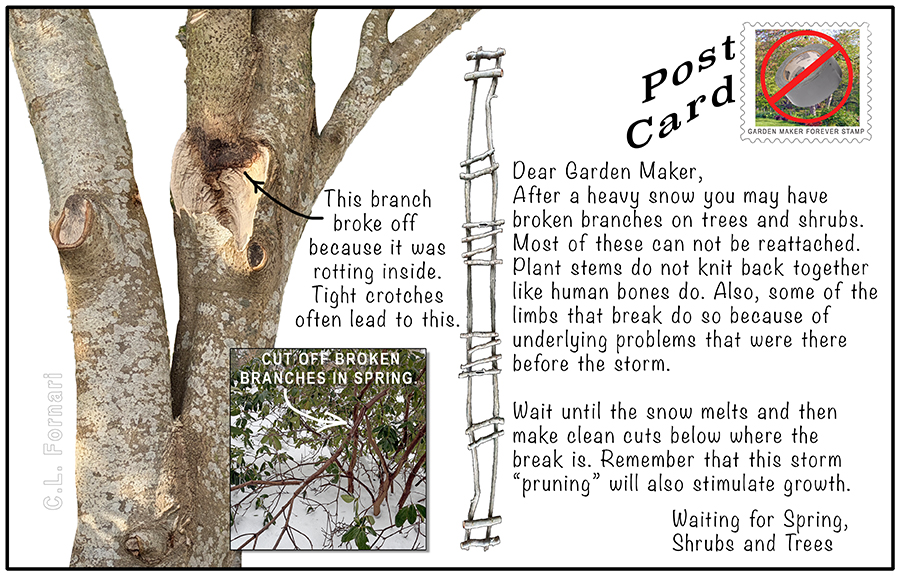
The stamp on this Postcard From Plants reminds us that duct tape is not intended for plant repair!
Evergreens Plastered to the Ground You are likely to see several of your evergreens bent over by the weight of the snow, and held in place by the below-freezing overnight temperatures. Even many deciduous (bare branches, no leaves) shrubs are bent over and frozen in place. People wonder if they should go out and pull such plants up. First of all, know that your safety is more important than the plants. If it’s difficult for you to walk in the deep snow, leave them be. But if you can get to the plants safely on days when the temperatures are above freezing, gently pull on the stems to see if they easily pop up. If not, don’t try to free them; you’re likely to do more damage. If these plants are already broken the damage is done, and if they are frozen to the ground but unharmed, leaving them in place is the smartest thing to do.
People ask, “Once these snow-bent shrubs get upright again, will I need to tie them or stake them so that they are upright? This is a time-will-tell situation. Wait until the snow is melted and see how the plants respond. Many plants spring back up, aiming once again to capture as much sun on their leaves as possible. Others might remain curved, or growing at an angle. In such cases you can decide to leave the plant alone and appreciate its charm, or to try to gently correct the angle with soft rope and a stake.
Note: If you choose to pull the plant upright, do not tie the rope or cord all the way around the stem. Many have lost plants in the future because such ties have strangled those branches or trunks as the plant grows into forgotten cords.

This Rhododendron was frozen to the ground in my yard after the storm. Three days later the temperature rose to almost forty degrees, and I was able to gently pull on the branch so that it popped out of the snow easily. If you give such plants a gentle tug and they remain frozen in place, don’t try and free them.
Broken Branches You may see branches on shrubs or trees that have broken. Usually these can not be repaired. Do not tie them up with rope or duct tape. Occasionally a split trunk or cracked branch can be bolted back together, but these often become areas where moisture can collect that promotes rot. Usually the best response to a broken branch is the make a clean cut that is fairly vertical so that it sheds rainfall, and let the plant heal itself. Do not paint or otherwise cover such wounds. That is an old-school practice that we know does more harm than good. There is no hurry to make such clean cuts on damaged trees and shrubs unless the downed branches block walkways or roads. General cleanup can wait until the snow melts.
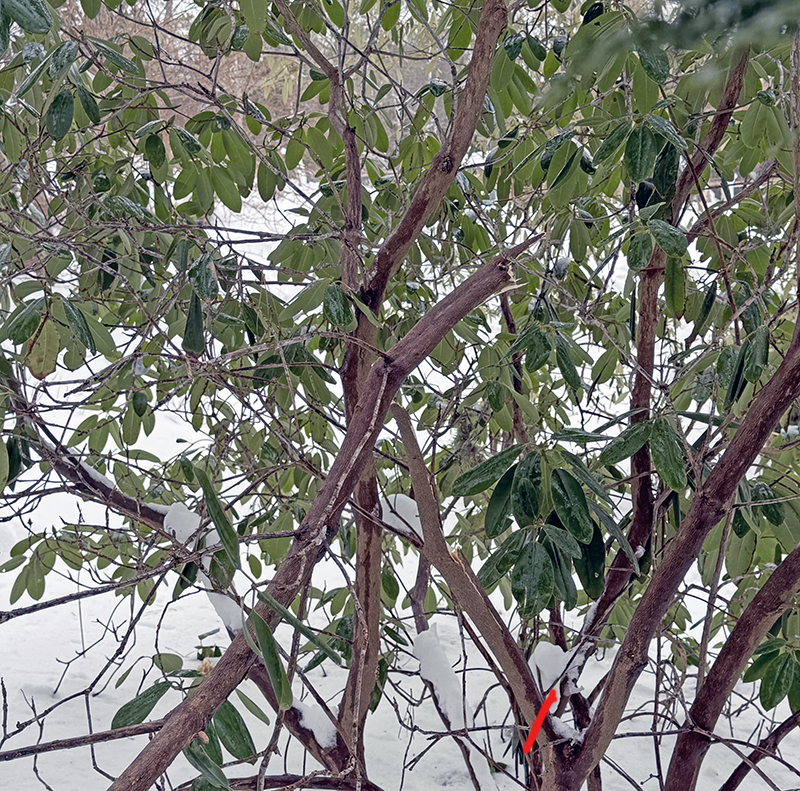
This Rhododendron branch broke on one of my plants. I drew a red line where I will make the clean-up cut later in the spring. Today, however, I will go out and cut off the tips of the broken branch and bring those leaves and flower buds inside. It’s possible that the flowers might open when kept in a vase of water indoors.
“Can I Root Those Broken Branches?” Most large stems won’t produce roots, so don’t plan on making an instant new shrub or tree. But the stems most likely to produce roots are forsythia, willows or red-twig dogwood. It doesn’t hurt to cut these to about 4 feet long and put them in a vase of water indoors. The forsythia will flower inside, and some willows will make pussy willows, so why not give those a try?

This American holly lost several branches. Some tore off from the weight of the snow, but the largest one broke off because it was already weakened by rot. See the next photo for details. None of these big branches that have fallen can be rooted.
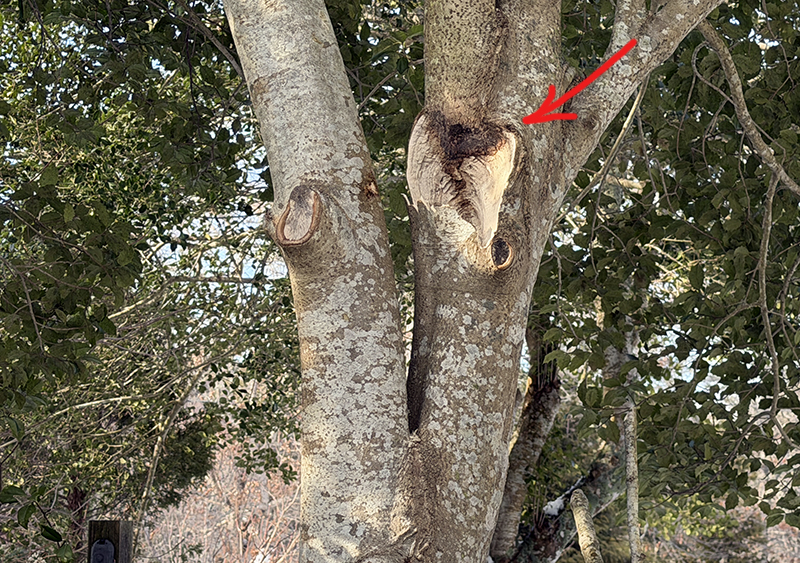
See how dark this area of the tree is? The limbs here were very tight together, and in that location there was enough space to collect water when it rained, causing rot in this area over time. The snow was heavy enough to break it off since the rot had already weakened it. Will this part of the tree heal over here? Hard to say. It might or it might not – in any case, sealing this area with tar or paint would make it worse. We will wait and see what the tree decides about it.
Tree or Shrub Tipped Over Many people have had plants that have entirely tipped over, exposing half of their root systems and laying the entire plant on the ground. The largest of these aren’t usually successfully pulled back into place, but if have a precious plant do consult with a certified arborist about pulling it upright and the likelihood of success. Sometimes plants live against all odds! If the toppled tree or shrub isn’t a hazard, you can wait until spring to deal the situation.

This pitch pine blew down in my yard. The combination of 60 MPH + winds and heavy, wet snow were too much for its root system. We will cut it up once the snow melts, and add the branches and logs to the brush pile shelter on the edge of the property. Such piles provide habitat for birds and critters, and allow insects that the woodpeckers eat to live in the old wood.
Ice Melting Products and Plants As we deal with the snow melting in the day and freezing at night, many use ice melt products to prevent slipping on porches and driveways. Some of these are salt and others are a modified carbonyl diamide (urea) crystal. The products labeled “paw safe” are usually the latter, and are not harmful to plants. But once again, your safety is the top priority. Once the snow and ice are gone you can flush out the areas near where you’ve used such products should the spring not bring some good rainfalls.
Plow Scraped up the Lawn Ignore this for now. Wait until the snow melts. At that time you can push the pieces of sod back into place the best you can. Come April, top-dress these areas with a light application of loam or mix of loam and compost. Scatter grass seed or white clover seed over the area and keep it damp while the seeds germinate.
Dog Repeatedly Urinating in the Same Place I don’t know about your dog, but my Sato, Sparky, has been appalled by the snow. When we go out and it’s hard for him to walk or find a place to “do his business” he looks at me with accusing eyes as if he’s thinking, “How could you have allowed this to happen?” For the past month he’s had to urinate in the same 5 foot square of land off of our back deck. Will the lawn and perennials in that area be damaged? It’s pretty likely. I may need to replace the Heuchera and put new seed on the lawn. But aren’t I lucky to be able to grow such perennial plants for their beauty, and not because I’m depending on them for my winter food? I try and stay focused on the fact that in 20 or 30 days the snow will be gone and Sparky and I will be walking in the woods and fields again.

Sparky has been totally bored. During the blizzard and its aftermath there have been no long walks, no visits with other dogs, and no sniffing the smells in the woods.
0 Comments